Brushed and brushless motors both convert electrical energy into mechanical motion, but they use different methods to switch electrical current. Brushed motors use mechanical brushes and a commutator, while brushless motors use electronic commutation. Brushless motors typically offer higher efficiency, longer life, lower maintenance requirements, and quieter operation.
Introduction
DC motors are used throughout motion control systems, industrial equipment, medical devices, robotics, and automation solutions. Two of the most common technologies are
brushed DC motors and
brushless DC motors. Understanding the differences between these motor types helps engineers select the best solution based on performance, reliability, maintenance requirements, and overall lifecycle cost.

A brushless motor, as the name suggests, is a motor that does not use brushes to convert electrical energy to mechanical work. Before understanding the term “brushless”, it’s helpful to understand the function of a brush in a brush motor.
Brush Motors:
The brush (in a brush DC motor) connects current to a set of coils. When energized, these coils produce a magnetic field. This magnetic field causes the rotor to turn, orienting the rotor to magnets mounted on a stator (the stationary portion of an electric motor). The force created by the magnetic field disconnects energized coils and then energizes the next set - producing a recurring, rotating, mechanical on-off cycle that results in rotational motion. The ends of the coils are connected to the commutator. The commutator has copper segments for the brush to contact and conduct electricity. Each segment is electrically isolated from the next. The segments are called “commutator bars.”
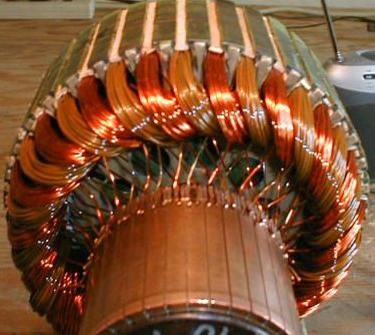
The assembly, consisting of the motor shaft, coils and commutator is called an armature.
The magnetic orientation produced by the electricity causes the rotor to spin and orient to the opposite pole. Running current in the opposite polarity will reverse the direction of rotation. External electronics are not required to run a brush motor, only a DC power supply. The change in coil polarity on the inside (on the rotor), causes a rotation on the inside (rotor).
How a Brushed Motor Works
A brushed motor uses carbon brushes and a commutator to deliver current to rotating windings on the rotor. As the rotor turns, the commutator continuously switches current between winding sets, maintaining rotational torque.
Benefits of Brushed Motors
- Lower initial cost
- Simple operation
- Direct DC power capability
- Straightforward speed control
Considerations
- Brushes wear over time
- Higher maintenance requirements
- More audible and electrical noise
- Lower efficiency compared to brushless alternatives
Brushless Motors:
A brushless DC motor does not have mechanical connections to conduct electricity to the coils. Instead, a solid-state drive is required to energize and switch the coils to produce a rotating magnetic field. Typically, the coils are wound in the stator and the magnets are mounted on the rotor. The change in coil polarity on the outside (stator) causes a rotation on the inside (rotor).
There are two prevalent types of brushless stators - slotted and slotless. In a slotted stator, the wire is wound around teeth in the stator. The teeth provide mechanical rigidity to hold the coil in place while it is being energized. In a slotless stator, the wire is wound into coils. The coils are then flattened and formed into a cylinder. The wire cylinder (basket) is then varnished or heated to activate the adhesive properties of the magnet wire. The only mechanical rigidity a slotelss stator has is adhesion to adjacent wires. There are no teeth to hold the wires in place. The slotless configuration allows more copper wire to be contained per unit volume, therefore increasing the power density (output power per unit volume).
How a Brushless Motor Works
Brushless motors eliminate mechanical commutation. Instead, an electronic drive energizes stator windings in sequence according to rotor position.
Benefits of Brushless Motors
- Longer service life
- Higher efficiency
- Reduced maintenance
- Lower noise
- Better performance at higher speeds
Considerations
- Higher initial system cost
- Requires electronic control hardware
What is the Difference Between a Brushed and a Brushless Motor?
Brushed Vs Brushless DC Motors
With brush motors, the stationary field (stator) is created by permanent magnets interacting with a rotating field (rotor) which contains the motor windings. Brushless motors are just the opposite - in that the stator field is the wound member and the rotating field is the permanent magnet.
In both cases, the interaction of these fields produces a torque which turns the rotor. As the rotor turns, current in the windings is switched - or commutated - to produce a continuous torque.
- The brush commutated unit typically uses brushes made of graphite that ride on metal bars [the commutator] that are connected to the rotor coils. As the rotor turns, the brushes transfer current from one set of coils to another.
- The brushless units rely on their commutation through the use of a shaft position sensor sending a signal to an external winding switching circuit.
Typical Speeds:
Brush units work best continuously between 1,000 RPM and 10,000 RPM. The higher speeds are limited to a practical limit of 10,000 RPM due to the mechanics of brush to commutator interface characteristics. As the rotor speeds up, the brushes begin to float over the commutator, making poor physical and electrical contact. On the other hand, brushless motors can typically run at higher speeds – they are only limited by the mechanical integrity of the rotor, speed related losses and the stability of the bearings being used.
Noise Generation:
Audible noise in brush motors comes from bearings, brushes and rotor imbalance. In brushless designs, the noise generation from brushes is eliminated, making brushless designs quieter.
Life Expectancy:
As a general rule, brushless units last longer than brush motors. The primary limiting features of a brush motor are its brushes and commutator. A typical brush life of 2,000 to 5,000 runtime hours is common, but it should not be considered a guarantee for all applications. Brushless units typically exceed 10,000 hours and they are usually limited by bearing life and environmental conditions.
Cost:
Many times, the total lifecycle costs of two products can be the deciding factor between them. A brushless motor requires an electronic drive whereas the brush motor does not. The additional cost of the electronic drive makes brushless motor systems more expensive than brush motors. Both types need a power supply. The brush motor can run on a direct power supply. A brushless motor needs a drive powered by a power supply. When operating life becomes an important factor, such as in high duty cycle applications, the lifecycle costs of having to replace a brush motor can be considerable. In addition to the cost of the motor, technician expenses and lost revenue from machine downtime should be accounted for in the selection process.
The chart below provides additional comparisons between Brush vs Brushless DC Motors:
|
|
Brush
|
Brushless Slotted
|
Brushless Slotless
|
|
Commutation (method of rotating the magnetic field)
|
Mechanical using brushes
|
Electronic using a solid-state drive
|
Electronic using a solid-state drive
|
|
Life expectancy (at 100% duty cycle)
|
3000 hours
|
>10,000 hours
|
>10,000 hours
|
|
Typical failure mode
|
Brush wear
|
Bearing failure
|
Bearing failure
|
|
Conduction heat transfer
|
Through the motor shaft
|
More efficient through teeth in the stator body
|
Most efficient through surface of stator body
|
|
Electrical noise
|
Caused by brushes contacting armature bars
|
Negligible
|
Negligible
|
|
Audible noise
|
Some
|
Low; only from rotor bearings
|
Low; only from rotor bearings
|
|
Rotor balancing
|
Rotor with copper windings
|
Rotor with solid magnet segments (more homogenous rotor)
|
Rotor with solid magnet segments (more homogenous rotor)
|
|
Maximum speeds
|
~5000 rpm
|
>10,000 rpm
|
>10,000 rpm
|
|
Speed regulation
|
Easy; speed is proportional to input voltage
|
Speed is still proportional to drive output voltage; requires a solid-state drive
|
Speed is still proportional to drive output voltage; requires a solid-state drive
|
|
Torque regulation
|
Easy; torque is proportional to input current
|
Torque is still proportional to drive output current; requires a solid-state drive
|
Torque is still proportional to drive output current; requires a solid-state drive
|
|
Mechanical constraint of coil windings
|
Contained by teeth on the armature
|
Contained by teeth on the stator
|
Relies on a varnished stator
|
|
Cogging torque mitigation
|
Skewed armature
|
Skewed stator
Skewed magnetization on rotor
|
Inherently no cogging torque
|
|
Power density
|
Lowest
|
|
Highest
|
|
Efficiency
|
~60%
|
~80%
|
>90%
|
|
Cost
|
Lowest
|
|
Highest
|
|
Common applications
|
Lower duty cycles
Lower speeds
Lower costs
|
Continuous duty
High acceleration and deceleration rates
|
Continuous duty
High acceleration and deceleration rates
Highest speeds
Slowest speeds
Small volume for the motor
|
|
Rotor position
|
Not important
|
Hall sensors determine rotor position for the drive to determine which phase to energize first
|
Hall sensors determine rotor position for the drive to determine which phase to energize first
|
|
Cost
|
Lowest
|
|
Highest
|
When to Choose a Brushed Motor
Choose a brushed motor when:
- Cost is a primary driver
- Duty cycles are moderate
- Maintenance access is available
- Simplicity is preferred
When to Choose a Brushless Motor
Choose a brushless motor when:
- Continuous operation is required
- Reliability is critical
- Maintenance must be minimized
- High efficiency is desired
- High-speed operation is needed
Typical Applications
Brushed Motor Applications
- Consumer devices
- Portable equipment
- Low-cost automation systems
Brushless Motor Applications
How to Select the Best Motor
Consider:
- Duty cycle
- Available maintenance access
- Noise requirements
- Speed requirements
- Efficiency goals
- Total lifecycle cost
In summary:
Both Brush & Brushless motor technologies are applicable in today’s motion controls market. The selection depends on how the factors summarized above affect the goals of the designer.
FAQ
What is the main difference between a brushed and brushless motor?
Brushed motors use mechanical brushes and a commutator while brushless motors use electronic commutation.
Which motor lasts longer?
Brushless motors generally last longer because they do not experience brush wear.
Are brushless motors more efficient?
Yes. Brushless motors typically operate more efficiently than brushed motors.
Which motor requires less maintenance?
Brushless motors usually require less maintenance.
Why do brushless motors cost more?
Electronic drives and controls increase overall system cost.
Which motor is quieter?
Brushless motors generally produce less audible noise.
Do brushless motors require a controller?
Yes. Electronic commutation requires a motor drive or controller.
Are brushed motors still used?
Yes. Many cost-sensitive applications continue to use brushed motor technology.
PITTMAN/AMETEK application engineers are well versed in these design considerations – and we can be contacted to aid in the selection process. To learn more – CONTACT US TODAY!